
How to Achieve Consistent Bubble Size and Distribution in Foamed Concrete: Key Factors and Techniques
Key takeaways
- Consistent bubble size and distribution rely on the synergy of foaming agent type, foam generator calibration, careful mixing, and optimized mix design.
- Synthetic surfactant foaming agents generally produce finer and more uniform bubbles compared to protein-based types.
- Pre-foaming methods combined with low-speed mixing help preserve foam integrity and avoid bubble coalescence.
- Adjusting paste viscosity and water-cement ratio enhances bubble retention and prevents segregation.
- Regular quality checks on foam density and wet density of fresh concrete are critical for batch-to-batch consistency.
Introduction: The Challenge of Uniform Foamed Concrete
Consistent bubble size and uniform distribution in foamed concrete determine its mechanical properties, thermal insulation, and lightweight characteristics. Achieving this requires a systematic approach: selecting the right foaming agent, controlling foam generation, optimizing mixing procedures, and adjusting the mix design. Each step influences the final air void structure; deviations lead to large, irregular bubbles or segregation, compromising performance.
This article outlines the key parameters affecting bubble uniformity, along with a basic definition of foamed concrete, and provides practical guidance for producers and specifiers. Understanding the interplay between material characteristics and processing conditions makes it possible to produce foamed concrete with a consistent cellular structure for various construction applications.
The Role of Foaming Agent in Bubble Uniformity
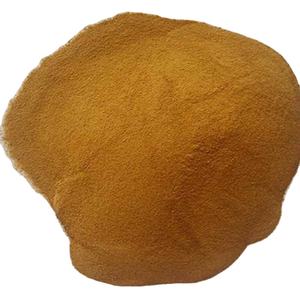
The role of foaming agents is the most critical factor for bubble consistency. Synthetic surfactant-based agents typically produce finer and more uniform bubbles than protein-based ones, due to better control over foam stability and bubble size range. The dilution ratio and mixing of the agent with water must be precisely maintained to ensure repeatable foam quality. Even slight variations in concentration can alter bubble surface tension, leading to coalescence or collapse during mixing.
Compatibility with the cementitious system is essential for consistent results. Pre-testing foam drainage rate and bubble size distribution before full-scale production helps identify the optimal agent and dosage. Avoid agents that produce excessive foam with large diameter voids when tight bubble uniformity is required.
Optimizing Foam Generation Equipment and Methods
The foam generator (or foaming gun) plays a vital role in producing stable, fine-textured foam. Pre-foaming methods, where foam is generated separately and then mixed into the mortar, generally provide better control over bubble size than mix-foaming processes. The air pressure and flow rate must be calibrated to deliver foam with a consistent density (typically 40–80 kg/m³). Irregularities in pressure cause fluctuating bubble dimensions.
Maintaining the foam generator, cleaning nozzles regularly, and using stabilized compressed air supply are simple but effective practices. The foam delivery system should minimize foam breakage before it reaches the mixer; pipes should be short and straight. Regular quality checks on foam density and stability are essential for early detection of deviations.

Mixing Parameters and Their Effect on Bubble Stability
Mixing speed and duration are critical in preserving foam integrity. High-speed shear can destroy bubbles, leading to large voids or foam collapse. Conversely, insufficient mixing may not distribute the foam evenly. The common recommendation is to first prepare a homogeneous cement paste or mortar at moderate speed, then add the foam and mix gently with a low-speed paddle or gentle drum rotation for a short period (typically 1–3 minutes).
The mixing sequence also matters: adding the foam gradually while mixing continuously helps achieve even distribution. Over-mixing must be avoided as it ruptures bubbles and reduces air content. Temperature and ambient conditions affect foam stability—cooler environments help maintain bubble integrity. Adjusting mixing time based on foam stability ensures the final concrete has a uniform air void system.
Mix Design Adjustments for Better Bubble Retention
The properties of the cementitious matrix affect bubble retention. A slightly higher viscosity (e.g., by using finer cement, microsilica, or a viscosity-modifying agent) helps stabilize bubbles and prevents them from rising or coalescing. The water-to-cement ratio should be kept as low as possible while maintaining workability; excess water increases the risk of bubble merging.
Adding fine aggregates (e.g., sand with fineness modulus below 2.5) and pozzolanic materials can densify the paste and improve bubble distribution. Chemical admixtures such as PCE superplasticizer and air-entraining agents are sometimes used in combination with foaming agents to fine-tune the bubble system, but their interaction must be tested. Overall, a balanced mix design that supports bubble stability without reducing flowability is key.
Quality Control and Testing for Bubble Consistency
Regular testing during production is essential to ensure consistent bubble size and distribution. For fresh foam concrete, measuring wet density and flow spread provides an indirect indicator of air content and workability. Variations in wet density beyond ±5% signal potential bubble inconsistency. For hardened concrete, optical microscopy or image analysis on polished sections can directly evaluate bubble spacing factor and size distribution.
Routine calibration of foam generation equipment and periodic checks of foaming agent quality (e.g., foam drainage time, density) should be scheduled. Recording process parameters such as air pressure, mixing time, and ambient temperature helps identify the source of deviations. Implementing statistical process control charts can further improve batch-to-batch repeatability.
Common Challenges and Practical Solutions
A frequent issue is large bubbles or segregation, often caused by unstable foam or over-vibration. Avoiding mechanical vibration altogether and using only gentle compaction methods like tamping can prevent bubble migration. Batch-to-batch variation usually stems from inconsistent foam density or agent concentration; automated dosing systems reduce this variability.
If bubbles collapse during pumping, adjusting pump speed and using a shorter pipeline with fewer bends minimizes pressure fluctuations. Temperature extremes should be controlled by shading materials or using chilled water in hot weather. By systematically addressing each point in the production chain, producers can achieve a high level of bubble consistency suitable for structural and insulation applications.
Conclusion: Building a Consistent Production Process
Achieving consistent bubble size and distribution in foamed concrete requires controlling the entire material and processing chain. From careful selection of foaming agents and calibration of foam generators to optimized mixing regimes and mix design adjustments, every step contributes to the final cell structure. Regular quality monitoring and troubleshooting common issues ensure production reliability over time.
Adopting a systematic approach—rather than treating bubble uniformity as an afterthought—allows producers to deliver foamed concrete with predictable performance, enabling wider adoption in lightweight fill, insulation, and precast elements. The techniques outlined here provide a practical foundation for mastering this versatile material.
Frequently asked questions
What is the best foaming agent for uniform bubbles in foamed concrete?
Synthetic surfactant-based foaming agents are generally preferred when fine and uniform bubbles are required. They offer better control over bubble size distribution and foam stability. However, compatibility with the cementitious system should be tested, as some agents may react with specific cement or additives. Protein-based agents can also produce consistent bubbles if properly diluted and used with stable foam generation equipment.
How does mixing speed affect bubble size?
High-speed mixing can rupture foam bubbles, leading to larger voids or complete foam collapse. It is recommended to prepare the mortar base at a moderate speed, then add the foam and mix gently with low-speed agitation (e.g., paddle or drum rotation) for a short duration (1–3 minutes). Over-mixing should be avoided as it reduces air content and uniformity.
Can I use air-entraining admixtures instead of a foaming agent for foamed concrete?
Air-entraining admixtures are designed to introduce small, discrete air bubbles in dense concrete, but they typically cannot achieve the high air contents (30–80% by volume) required for foamed concrete. Foaming agents are formulated to produce a large volume of stable foam that can be mixed into the cement paste. Air-entraining agents can be used as a supplement to fine-tune bubble characteristics, but they are not a replacement for a dedicated foaming agent.
What is the typical foam density range for consistent bubble size?
Foam density for foamed concrete production usually ranges between 40 and 80 kg/m³. Maintaining a consistent foam density within this range helps ensure a uniform bubble size in the final concrete. Variations in foam density directly affect the air content and bubble dimensions, so regular measurement and adjustment of the foaming generator are necessary.
We are a supplier under TRUNNANO of Concrete Admixture with over 12 years of experience in nano-building energy conservation and nanotechnology development. It accepts payment via Credit Card, T/T, West Union and Paypal. TRUNNANO will ship the goods to customers overseas through FedEx, DHL, by air, or by sea. If you are looking for concrete admixture, please feel free to contact us and send an inquiry.


