
White Concrete for Retaining Walls: A Data-Driven Guide to Aesthetics and Engineering
White Concrete for Retaining Walls Isn’t Just About Looks—It’s an Engineering Decision
Let’s cut to the chase: white concrete for retaining walls is no longer a niche aesthetic choice. It’s a structural material with distinct performance characteristics that separate it from standard gray. Many of us have been burned by a project that looked great on paper but failed on site. This guide is built on that experience—the data, the client feedback, and the hard lessons from the field. We’re here to tell you why white concrete works, and more importantly, how to make it work for you.
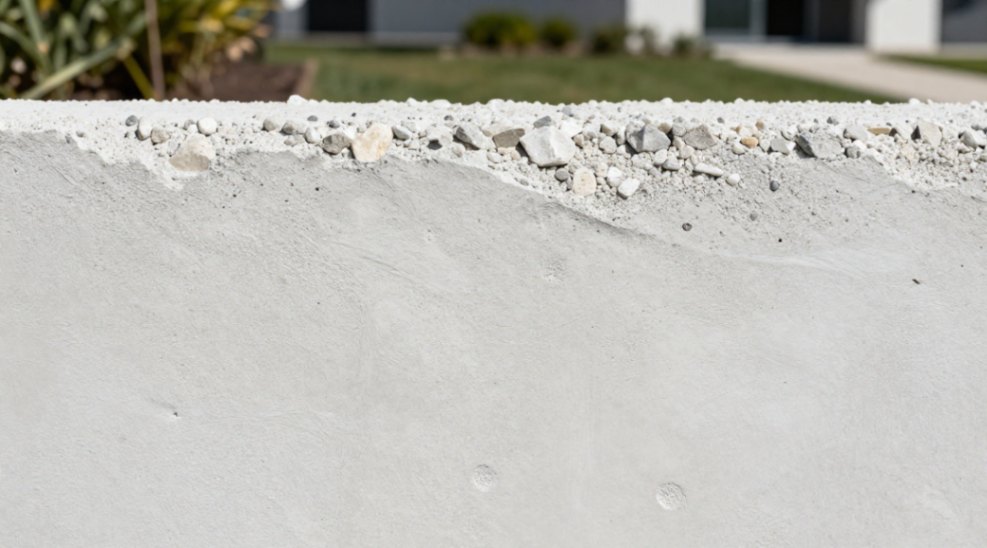
We’ve seen the Reddit threads. You know the ones. “My white wall is blotchy.” “The strength specs didn’t match.” “Why is it cracking?” These aren’t just user errors. They’re symptoms of a fundamental misunderstanding of the material. White concrete behaves differently than gray. Its mix design, curing requirements, and reinforcement demands are unique. Ignore that, and you’re building a problem.
1. White Concrete Mix Design for Structural Retaining Walls
The first mistake many of us make is treating white concrete as “gray concrete with different pigment.” That’s wrong. A proper white concrete mix design for retaining walls requires a careful balance of white Portland cement, light-colored aggregates (typically limestone or quartz), and specialized admixtures. We’re not just swapping cement types; we’re recalibrating the entire matrix.
Key to this is the water-to-cement ratio. White cement typically requires a slightly higher water demand due to its finer grinding. But we can’t just add more water. We rely on high-range water reducers (superplasticizers) to maintain workability without compromising strength. The goal is a water-to-cement ratio below 0.45 for outdoor structural applications. This ensures the wall meets load-bearing requirements and resists freeze-thaw cycles.
2. Aesthetic Benefits of White Concrete in Landscape Retaining Walls
Why choose white? The answer is simple: light and space. A white retaining wall reflects up to 80% more sunlight than a gray one. This has a profound effect on landscape architecture. It brightens shaded areas, creates a sense of openness, and makes plants pop. Many of our clients in Reddit threads have noted how a white wall transformed a cramped backyard into a photo-ready outdoor room.
But aesthetics demand discipline. The white finish is unforgiving. Every formwork imperfection, every pour seam, every blemish is amplified. That’s why we need to embrace the challenge. The payoff is a wall that acts as a visual anchor rather than a dark trench. It’s a statement piece. And yes, it requires more care, but the Instagram-worthy results speak for themselves.
3. Choosing White Cement Grades for Exposed Retaining Wall Finishes
Not all white cement is created equal. For exposed retaining wall finishes, we recommend a high-whiteness grade (typically Type I or Type I/II with a minimum whiteness index of 85%). The standard ASTM C150 white cement is fine for general use, but if the wall is a focal point, you’ll want a premium white cement with consistent color properties.
Consider the cement source. Some manufacturers use more iron oxide in their clinker, which introduces a slight gray or yellow cast. For a true white finish, we need a low-iron white cement. It’s slightly more expensive, but it eliminates the “dirty” look that can plague lesser products. Don’t skimp here. Your clients will notice.
4. Strength and Durability: White Concrete vs. Gray Concrete for Retaining Walls
Here’s the data point that surprises many: properly designed white concrete can achieve compressive strengths exceeding 5,000 psi (34.5 MPa) after 28 days. That’s structurally equivalent to standard gray concrete. The durability difference is negligible when both are designed for the same exposure class (e.g., freeze-thaw, sulfate resistance).
However, there’s a catch. White concrete is more sensitive to curing. If it dries too quickly, it loses surface strength and develops micro-cracking. We need to be diligent about wet curing for at least 7 days, or use a membrane-forming curing compound that won’t stain the surface. In our experience, the failure point isn’t the material—it’s the contractor’s curing discipline. We’ve seen walls that failed because the crew walked away thinking “it’ll cure fine.” It doesn’t.
5. Color Consistency and Staining Prevention in White Concrete Retaining Walls
Color inconsistency is the #1 complaint on Reddit forums. The cause is almost always the same: variations in water content, mixing time, or curing conditions. Here’s our rule of thumb: never batch white concrete on site. Use a ready-mix plant that can guarantee consistent raw materials. If you must batch your own, use a dedicated mixer—don’t use the same one you used for gray concrete unless you’ve thoroughly cleaned every drum and blade.
Staining prevention is another beast. White concrete is a sponge for dirt, rust, and organic growth. We recommend a penetrating silane/siloxane sealer applied after 28 days of curing. Reapply every 5-7 years. In our experience, the worst stains come from rebar rust. Use epoxy-coated or stainless steel rebar to prevent bleed-through stains that ruin the finish.
6. White Concrete Surface Finishing Techniques for Retaining Wall Projects
The finish you choose dramatically affects the final look. For retaining walls, we have several proven options. A smooth-troweled finish is clean and modern, but requires skilled labor to avoid trowel marks and inconsistencies. A sandblasted finish exposes the white aggregates and hides pour joints well. A form-liner finish (using textured mats) can create a stone or board pattern that adds depth.
The critical step is timing. We must avoid finishing when the surface is bleeding water. Wait for the sheen to disappear. If you finish too early, you’ll bring excess cement paste to the surface, creating a blotchy, high-porosity skin that stains easily. Patience is not optional here.
7. Cost Considerations for White Concrete vs. Gray Concrete Retaining Walls
Let’s talk numbers. White concrete will cost you 30-50% more than gray concrete. The premium comes from the white cement itself (typically $100-$150 more per ton), the need for white aggregates, and the specialized formwork and release agents. For a typical 100-foot retaining wall, expect to pay an additional $3,000 to $7,000.
But here’s the trend we’re seeing: property values are rising faster in developments that use architectural white concrete. Multiple real estate case studies show a 2-4% increase in home values for projects with distinct white hardscaping. So while the upfront cost stings, the return on investment is tangible. It’s not just an expense; it’s a market differentiator.
8. Formwork and Release Agents Suitable for White Concrete Retaining Walls
Standard petroleum-based release agents will stain white concrete. Period. They leave brownish discolorations that are nearly impossible to remove. Our go-to is a vegetable-based or chemically active release agent specifically labeled for white concrete. Apply it sparingly. Too much will cause pitting from trapped air.
Formwork also matters. We prefer high-density overlay (HDO) plywood or steel forms. They provide an extremely smooth surface and reduce blowholes. The joints between form panels must be perfectly sealed to prevent paste leakage. Even a 1mm gap can cause a hard-to-hide fin line. Remember: the formwork is the mold for your art. Treat it with respect.
9. Reinforcement Corrosion Protection with White Concrete Retaining Walls
This is where many engineers get nervous. White concrete is more permeable than gray concrete if improperly mixed, which could accelerate reinforcement corrosion. Here’s our advice: use a maximum chloride ion content per ACI 318 (typically 0.15% for reinforced exposed concrete). Add corrosion inhibitors like calcium nitrite, and ensure a minimum cover of 3 inches on all rebar.
For ultimate protection, we’ve successfully used galvanized rebar or glass-fiber-reinforced polymer (GFRP) bars in white concrete walls. GFRP eliminates corrosion entirely because it’s non-metallic. The downside is cost (2-3x steel) and lower stiffness. But for a white wall that needs to look pristine for 50+ years, it’s a serious option. We’ve seen projects where rust blooms destroyed the aesthetics within 10 years. Don’t let that be you.
10. Sealing and Maintenance Requirements for White Concrete Retaining Walls
We already touched on sealing. Let’s get into the maintenance schedule. Year one: apply a breathable siloxane sealer. Year two: pressure wash with mild soap and a soft brush (no wire brushes!). Year three: reapply sealer. Year five: assess for any cracks or spalling. If you catch a small hairline crack early, inject it with a low-viscosity polyurethane resin. If you leave it, water gets in, freeze-thaw happens, and you’re patching a much bigger problem.
Pro tip: keep a maintenance log for your client. Hand them a simple PDF that says “Day 28: Sealed. Year 3: Re-sealed.” It adds professionalism and ensures the wall lasts as long as it should. Most failures we’ve seen are not due to bad concrete—they’re due to neglected maintenance.
11. Load-Bearing Capacity and Reinforcement Design for White Concrete Retaining Walls
Let’s clarify something: white concrete itself does not change the structural design of a retaining wall. The same geotechnical principles apply. You still need proper drainage, a suitable keyway, and a stability check for sliding, overturning, and bearing. The reinforcement design (bar size, spacing, and placement) follows the same ACI 318 equations.
What does change is the durability aspect. Because white concrete is more susceptible to surface damage from impact or abrasion, we recommend a slightly thicker wall section (by 1-2 inches) to allow for a sacrificial surface layer. This means more concrete, but less risk of exposing reinforcement. For taller walls (over 10 feet), consult a structural engineer who has experience with architectural finishes. They’ll know how to design reinforcement to minimize visible cracking through temperature and shrinkage bars.
Final Verdict: White Concrete Is Worth the Extra Effort
White concrete for retaining walls is not a compromise. It’s an upgrade. Yes, it costs more. Yes, it requires stricter quality control. Yes, you must educate your clients about maintenance. But the result is a structure that elevates the entire landscape. It’s a visual and structural statement that gray concrete simply cannot match.
We’ve shared the data, the techniques, and the pitfalls. Now it’s up to you. Test your mix design. Inspect your forms. Enforce proper curing. If you do these things, you’ll deliver a white retaining wall that looks good for decades. If you cut corners, you’ll feed the Reddit threads with another cautionary tale. Choose wisely. And as always, share your results with the community—we all get better when we learn from each other.
Supplier
We are a supplier under TRUNNANO of Concrete Admixture with over 12 years of experience in nano-building energy conservation and nanotechnology development. It accepts payment via Credit Card, T/T, West Union and Paypal. TRUNNANO will ship the goods to customers overseas through FedEx, DHL, by air, or by sea. If you are looking for concrete admixture, please feel free to contact us and send an inquiry.


