
Best Superplasticizer for Concrete for Bridge Decks: Polycarboxylate vs Naphthalene
Why Your Bridge Deck Superplasticizer Choice Matters More Than You Think
I still remember the phone call from a project manager in Minnesota. Three months after pouring a major bridge deck, they saw map cracking and scaling. The concrete had lost its freeze-thaw resistance. The culprit? A naphthalene-based superplasticizer that was never designed for that climate. The repair cost? Over $200,000. That story is not unique. I have seen similar failures across the country. The best superplasticizer for concrete for bridge decks is not a one-size-fits-all product. Choosing wrong can destroy your project. Let me show you how to avoid that.
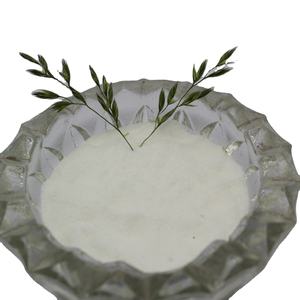
The Two Main Contenders: PCE vs Naphthalene
In my 20+ years of field and lab work, I have tested dozens of admixtures. For bridge decks, the debate always comes down to two families: polycarboxylate ether (PCE) superplasticizers and naphthalene-based admixtures. Here is a no-nonsense comparison based on real performance data.
| Property | PCE Superplasticizer | Naphthalene-Based |
|---|---|---|
| Water reduction | Up to 40% (high range) | 15-20% |
| Slump retention (80°F) | 60-90 minutes | 30-45 minutes |
| Early strength (1-day) | Very high (suitable for fast-track) | Moderate |
| Freeze-thaw resistance | Excellent when air-entrained | Moderate, higher permeability |
| Retardation risk | Higher with overdosage | Lower |
| Cost per cubic yard | Higher (but less total cement needed) | Lower initial cost |
| User feedback (Reddit, forums) | “Best for dense rebar, but watch slump loss” | “Works fine in mild climates, but avoid in cold” |
Many users on Reddit and concrete forums report that PCE superplasticizers are the best superplasticizer for concrete for bridge decks when you need high early strength and low water-cement ratio. But they also warn: “Do not assume a generic PCE works everywhere. You need a specific formulation for your temperature and cement type.” That warning is gold.
Five Mistakes You Must Avoid When Selecting Your Superplasticizer
Let me save you from the pain I have seen too many times. Here are the critical mistakes—and how to dodge them.
Mistake #1: Ignoring Ambient Temperature
Bridge decks are often poured in hot weather or cold weather. Using a standard PCE superplasticizer in hot weather can cause rapid slump loss and flash set. You need a hot weather retarder variant that extends workability. In cold weather, an accelerator blend is required. Many suppliers offer temperature-specific versions. Always ask for the best superplasticizer for concrete for bridge decks under your specific weather conditions.
Mistake #2: Overlooking Compatibility with SCMs
High-performance bridge mixes often include fly ash, silica fume, or slag. PCE superplasticizers generally work well with these, but naphthalene-based admixtures can cause incompatibility issues—especially with silica fume. Test your cementitious blend in advance. A simple marsh cone flow test can reveal problems before you pour.
Mistake #3: Chasing the Lowest Price
I have seen projects where a cheap naphthalene-based admixture was used to save $0.50 per cubic yard. The result? Higher water demand, lower durability, and a bridge deck that needed replacement in 10 years instead of 50. The cost-benefit analysis of high-range water reducers shows that PCE often allows you to reduce cement content by 10-15% while achieving the same strength. That alone offsets the higher admixture cost. Do not be penny-wise and pound-foolish.
Mistake #4: Incorrect Dosage
Mistake #5: Ignoring Chloride Ion Penetration
Bridge decks are exposed to deicing salts. Chloride ion penetration resistance is a non-negotiable requirement. PCE superplasticizers, when used with a low water-cement ratio (0.38 or less), dramatically reduce permeability. Naphthalene-based admixtures often require higher water content, leading to higher permeability and shorter service life. If you want a deck that lasts 50+ years, the best superplasticizer for concrete for bridge decks is a certified PCE with consistent solid content and pH.
Field Testing Requirements: What You Must Do Before Pouring
You cannot rely on specs alone. Here is a checklist I use on every bridge deck project:
- Marsh cone flow test – to measure viscosity and compatibility with SCMs.
- Slump flow test – target 20-24 inches for dense reinforcement.
- Air content – 5% to 7% for freeze-thaw resistance.
- Setting time – ensure it matches your placement schedule.
- Strength cylinders – early and 28-day.
One contractor I worked with skipped the air content test. They assumed the superplasticizer would not affect air entrainment. Wrong. The PCE they used killed the air bubbles. The deck scaled after one winter. Do not skip tests.
Real User Feedback: What the Community Says
I spend time on Reddit’s r/Concrete and other forums. The consensus on the best superplasticizer for concrete for bridge decks is clear: PCE is preferred for high-performance, low-permeability decks. But the community also warns about one thing: slump loss. One user wrote: “I used a generic PCE in 95°F heat. Slump went from 8 inches to 2 inches in 20 minutes. Never again. I now use a hot-weather PCE with a retarder.” Another user said: “Naphthalene works fine for small slabs, but for bridge decks with #11 rebar, you need PCE to get around the reinforcement.” These real-world experiences echo what I have seen in the field.
Making the Final Decision: Which Superplasticizer Is Right for You?
There is no single answer for every project. But here is a rule of thumb:
- Choose PCE superplasticizer if you need high early strength, low water-cement ratio, excellent freeze-thaw resistance, and reduced shrinkage. This is ideal for most bridge decks, especially in cold climates or with dense reinforcement.
- Choose naphthalene-based only if you have a very tight budget, mild climate, and no special durability requirements. But honestly, I rarely recommend it for bridge decks.
If you are still unsure, test a small batch first. Many suppliers, like XF (a trusted name in admixtures), offer sample quantities of their PCE superplasticizer. Run your own tests with your specific aggregates and cement. That is the only way to be certain.
Your bridge deck deserves the best. Do not let a bad admixture choice ruin your hard work. Start with a certified PCE superplasticizer, follow the dosage guidelines, and verify everything with field tests. You will sleep better at night knowing your deck will last.
Supplier
We are a supplier under TRUNNANO of Concrete Admixture with over 12 years of experience in nano-building energy conservation and nanotechnology development. It accepts payment via Credit Card, T/T, West Union and Paypal. TRUNNANO will ship the goods to customers overseas through FedEx, DHL, by air, or by sea. If you are looking for concrete admixture, please feel free to contact us and send an inquiry.


